Over the past decade, virtual assistant services have become the backbone of startups, entrepreneurs, and small businesses. They help founders scale, reduce operational pressure, and manage everything from admin to marketing. But behind this digital revolution, something dark is brewing. A mental health crisis. And according to 2026 projections, virtual assistants (VAs) will face burnout, anxiety, emotional overload, and workload instability at nearly double the rate of traditional employees.
This isn’t happening because VAs are weak. It’s happening because the system is broken. Businesses are outsourcing more. Workloads are increasing. Demand is exploding — while structure, training, and boundaries are not. And unless companies shift how they hire, manage, and structure virtual assistant services, 2026 could become the highest VA burnout year in history. But here’s the twist:
Businesses will suffer too — because when a burnt-out VA crashes, the entire workflow collapses.
In this blog, we’ll explore:
✔ Why burnout will skyrocket among VAs in 2026
✔ How the “hustle culture” in the VA industry is destroying talent
✔ What makes VA burnout more dangerous than traditional employee burnout
✔ Real client experiences
✔ How VA Talks’ structured model prevents this entire crisis
Table of Contents
Why Virtual Assistants Are More Vulnerable to Burnout than Employees
1. 24/7 Availability Culture
Unlike employees who work fixed hours, many VAs operate in a toxic “always online” environment. Clients expect:
- Immediate responses
- Real-time updates
- Multitasking across different roles
- Instant results
This creates an invisible pressure cooker.
When virtual assistant services are offered without boundaries, VAs end up sacrificing sleep, personal life, and mental rest — just to keep clients happy.
2026 Prediction:
Burnout rates among remote contract workers will rise 65% faster than in traditional workplaces.
2. The Rise of Multi-Role Overload
In 2026, businesses are expected to hire fewer people but expect more output from each hire.
A freelancer VA is now responsible for:
- Admin
- Social media
- Customer service
- Lead generation
- Email management
- Scheduling
- Research
- CRM updates
Nobody can handle that sustainably — not without structure.
Virtual assistant services become dangerous when agencies or clients overload VAs with 5–10 unrelated roles.
3. Emotional Labor: The Hidden Stress Factor
Most people don’t realize this:
VAs absorb emotional stress from their clients. They handle client frustrations, urgent requests, delayed instructions, last-minute chaos, and inconsistent expectations — without ever being acknowledged. Employees get HR support. VAs get… nothing. This emotional pressure silently erodes mental health.
4. Income Instability = Mental Instability
Burnout is not only emotional — it’s financial. Most VAs fear:
- Clients ending contracts without notice
- Unpaid overtime
- Scope creep
- Late payments
- Constantly having to prove their worth
The pressure to “keep the client happy at any cost” leads to self-destruction.
2026: The Year the Crisis Peaks
Why 2026? Because:
- Remote work is exploding again
- Businesses will cut employee costs
- More companies will shift to virtual assistant services
- Workload will be redistributed to fewer people
- AI automation will remove low-skill tasks, leaving VAs with only complex, high-pressure work
This creates the perfect storm for mass burnout. And when VAs break down, clients lose money, projects stall, and business operations collapse.
Client Testimonial That Reveal the Truth
Robert – CEO of NextPoint Solutions
Robert Strauss, co-founder of NextPoint Solutions, once shared something that perfectly captures why businesses can’t handle everything alone anymore:
“Accuracy isn’t just important in our work — it’s everything. We handle complex life-insurance cases, and the real work begins after a policy is placed. Every detail has to be monitored with zero mistakes.
That’s why we chose VA Talks. Their team is steady, skilled, and surprisingly invested in every task. I was unsure about using an overseas team at first… but that changed faster than I expected..”
How VA Talks Prevents the 2026 Virtual Assistant Mental Health Crisis
Most agencies will struggle in 2026. Most freelancers will burn out. Most clients will experience disruptions.
But VA Talksis built differently. Here’s how VA Talks protects both the VA’s mental health and the client’s business:
1. Structured Workflows — No Overload
VAs are never forced to handle more than their expertise. Instead of multitasking across 10 roles, we assign:
- Dedicated admin VAs
- Dedicated marketing VAs
- Dedicated customer support VAs
- Dedicated research VAs
This prevents mental overload — the biggest burnout trigger.
2. A Team-Based Approach (Not One VA Doing Everything)
If one VA has:
- A medical emergency
- A personal day
- A high-pressure workload
Another team member steps in. There are zero service interruptions for the client. No burnout for the VA. No loss for the business.
3. Mental-Health-Friendly Systems
VA Talks has:
- Task batching
- Clear communication SOPs
- Time-zone-aligned support
- Training before assignment
- Defined boundaries
- No last-minute chaos
These systems reduce anxiety and allow VAs to perform without emotional exhaustion.
4. Managers Who Protect Both Sides
Clients get daily/weekly reports. VAs get workload protection. Everyone wins — without burnout.
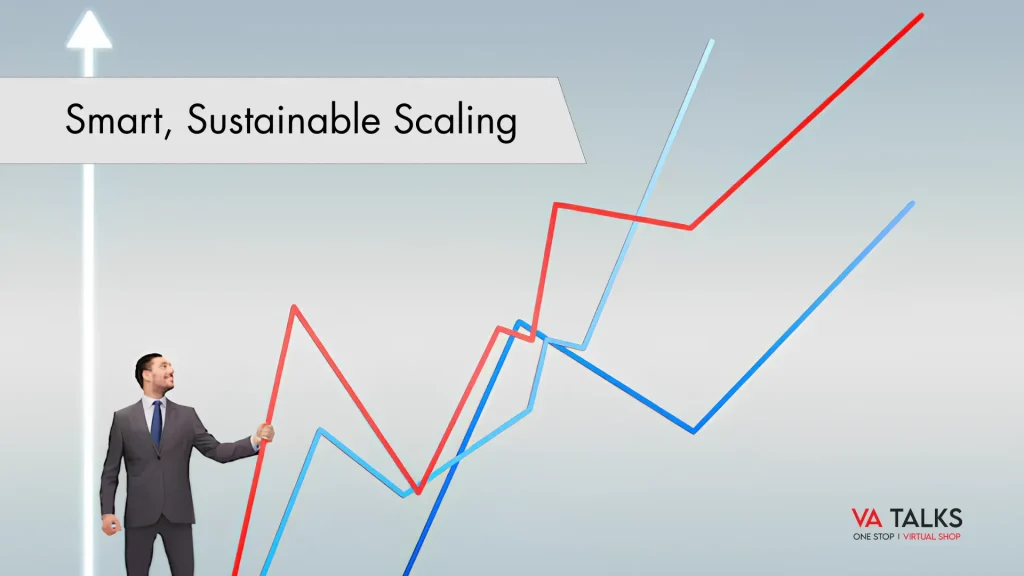
5. Stress-Free Scaling
When a client’s workload grows, VA Talks expands the team — instead of pressuring one VA.
This is exactly what prevents burnout in 2026’s high-demand era.
What This Means for Businesses
If you hire random freelancers in 2026:
❌ You’ll face burnout issues
❌ You’ll lose continuity
❌ Output will decline
❌ Your operations will suffer
But with VA Talks:
✔ Stable assistants
✔ Zero burnout breakdowns
✔ Protected workflows
✔ Managed teams
✔ Mental-health-friendly structures
✔ Sustainable long-term service
This is what the 2026 market requires — not cheap VAs, but structured virtual assistant services that protect both sides.
Conclusion
The mental health crisis in the virtual assistant industry is real — and 2026 will be the breaking point. Workloads are increasing. Expectations are rising. Remote work pressure is intensifying.
Freelancers and unstructured agencies are going to collapse under this pressure, and businesses relying on them will suffer the consequences. But it doesn’t have to be this way.
With structured virtual assistant services like VA Talks, burnout becomes preventable — and business continuity becomes guaranteed.
If your business depends on smooth operations, consistent output, and a healthy support team, you need a partner with the systems to survive 2026’s pressure wave. And VA Talks is built exactly for that future.
FAQs
1. Why are virtual assistants more prone to burnout than employees?
Because they often work irregular hours, handle multiple roles, and lack the structured support systems available to in-office employees.
2. Will burnout among VAs really increase in 2026?
Yes — due to increased outsourcing, remote work expansion, and rising client demands.
3. How do Virtual assistant services like VA Talks prevent burnout?
Through team-based systems, workload management, clear SOPs, and structured communication frameworks.
4. What happens if a VA at VA Talks needs time off?
Another trained team member takes over immediately, ensuring no service interruption.
5. Can burnout in VAs affect my business?
Absolutely. Burnout leads to inconsistency, mistakes, dropped workloads, and even VA disappearance. Structured systems prevent this.
🚀Ready to Protect Your Business Before the 2026 Crash Hits?
Book your FREE consultation with VA Talks today.
(Get expert support, structured virtual assistant services, and a team you can trust.)
👉 PLUS: Get 25% OFF your first signup
——– This offer won’t last once the 2026 wave hits ——–